



Parliament updates: Centre’s amendment bill for delimitation defeated in Lok Sabha
The Constitution 131st Amendment Bill, one of three draft legislations, required a two-thirds majority of votes to pass.
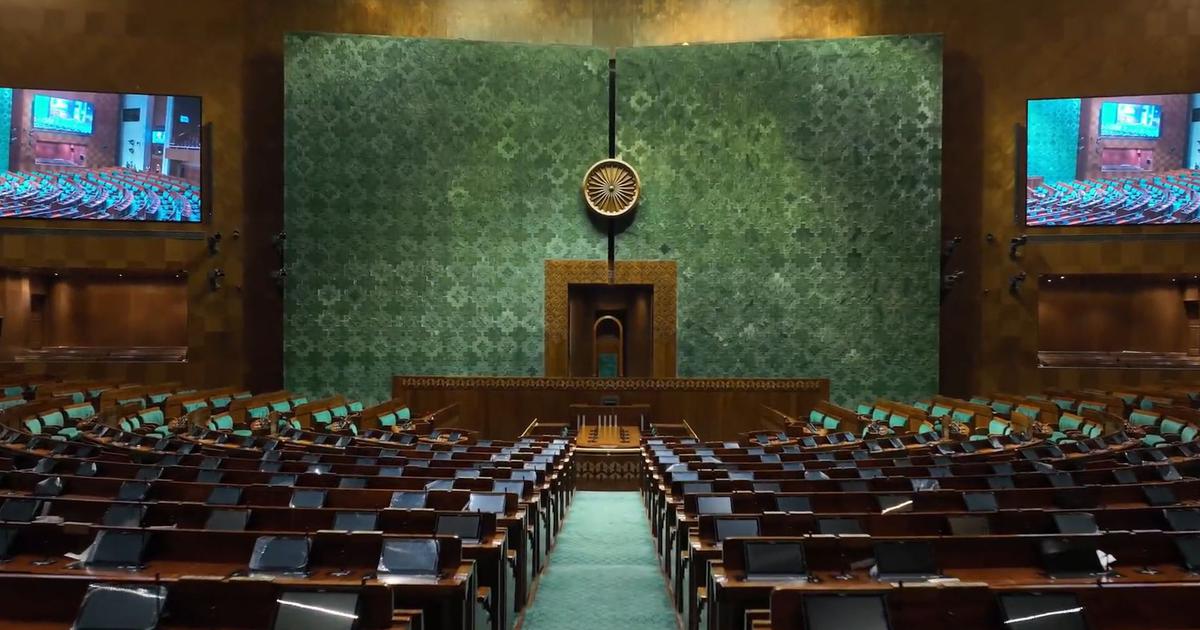
The Union government’s bill to amend the 2023 Women’s Reservation Act and redraw the boundaries of electoral constituencies was defeated in the Lok Sabha on Friday.
The 2026 Constitution 131st Amendment Bill, one of three draft legislations, required a two-thirds majority of votes in Parliament to pass. The ruling National Democratic Alliance does not have a two-thirds majority of MPs in any House. Therefore, it required the support of Opposition parties to pass the amendment.
The consideration of the bill was rejected by the House with 298 MPs voting in its favour and 230 against. With 528 MPs present in the Lower House, the bill would have required the support of 352 of them.
The government decided to withdraw the two other bills, saying that they were linked to the Constitution Amendment Bill and therefore could not be taken up for consideration separately.
The bills had been introduced by the government on Thursday, when a special three-day session of Parliament began.
Here are more top updates from the special session of Parliament:
- After the Lok Sabha proceedings, the Congress stated that the bill was defeated as the Union government “used an unconstitutional trick in the name of women” to bring it forward. Party leader Rahul Gandhi said the Opposition INDIA bloc had “stopped it”. Congress MP Priyanka Gandhi Vadra said “it was impossible for this bill to be passed” because of the way the BJP-led Centre had presented it, reported ANI. “The bill was defeated because of the way the government linked women’s reservation to delimitation and the earlier census,” she said.
- The debate: Earlier in the day, Rahul Gandhi reiterated the Opposition parties’ stance that while they support the amendment to the Women’s Reservation Act, they will vote against the delimitation of Lok Sabha constituencies.
- During the debate, Rahul Gandhi said that the Bharatiya Janata Party was introducing the bills “because [they] are scared of what is happening in the politics of the country...scared of the erosion of [their] strength, and you are trying to rejig the Indian political map”.
- The Congress leader said that the BJP “did it in Assam, Jammu and Kashmir and now imagining you can do it in India”.
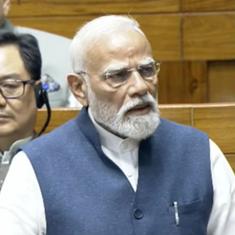
- PM Modi’s appeal for consensus: Gandhi’s statement came after Prime Minister Narendra Modi urged the Opposition to vote in favour of bills that propose to amend the Women’s Reservation Act and delimitation. Modi’s appeal had come hours before the bills were expected to be taken up for voting in the Lower House.
- Modi said on social media that the government addressed all apprehensions and “misconceptions relating to the legislation with facts and logic”.
- “I urge and appeal to all political parties to reflect carefully and take a sensitive decision by voting in favour of women’s reservation,” the prime minister said on social media. “On behalf of our Nari Shakti, I also request all members not to do anything that may hurt the sentiments of women across India. Crores of women are watching us…our intent and our decisions.”
- Minutes later, Modi repeated his appeal in another post.
- Earlier in the debate: Dravida Munnetra Kazhagam leader Kanimozhi demanded that the Women’s Reservation Act be implemented from the 2029 Lok Sabha elections within the current 543 seats. She called for the removal of the delimitation exercise as a pre-condition for implementing the women’s quota and alleged that the ruling BJP was using women as a “human shied” for electoral benefits.
- “These three bills disguised as if they are in support of women’s reservation constitute the single greatest assault on Indian federal structure,” The Hindu quoted her as saying. The DMK is opposing the bills.
- Congress leader Shashi Tharoor said that Parliament needs to be “candid about the implications” of delimitation. “Delimitation requires deliberation,” The Indian Express quoted him as saying. “There are three major fault lines: the balance between small and big states. Then, the balance between states like Tamil Nadu and Kerala, which have implemented the national population control goals. And states in the North which have not.”
The draft legislations
The Union government is seeking to increase the strength of the Lok Sabha to 815 from 543 and to operationalise the 33% quota for women in the Lok Sabha and Assemblies under the 2023 Women’s Reservation Act. A three-day special session of Parliament to discuss these bills began on Thursday.
The Opposition INDIA bloc has said that while it supports women’s reservation, it will oppose the bill for delimitation of Lok Sabha seats.
Opposition parties have said that population-based delimitation would give an undue advantage to northern and central states in the Lok Sabha, as the proportion of seats in the North would be higher. They also noted that the ruling BJP has greater support in northern states than in the South.
Although speculation about the amendment to the law had been rife in political circles for the past two weeks, copies of the draft legislation were shared with MPs for the first time on Tuesday.
Article 82 of the Constitution states that after every census is completed, the allocation of Lok Sabha seats to each state must be adjusted based on changes in its population.
The current composition of the Lok Sabha is based on the 1971 Census. According to the 84th Amendment Act of 2001, constituency boundaries were frozen until the first census after 2026.
The census, which began on April 1, is expected to conclude in 2027.
The bill that will be introduced in Parliament proposes to amend Article 82 of the Constitution to remove the entire proviso. This will pave the way for delimitation to take place based on the latest census, which was held in 2011.
The 2023 Women’s Reservation Act was brought into force on Thursday through a notification issued by the Union government. This came while Parliament was debating the amendments related to the same law, including proposals to modify its implementation timeline.
Also read:
- How Modi government aims to use women’s representation to expand Lok Sabha using 2011 census numbers
- Why delimitation in Assam and Kashmir led to charges of gerrymandering
- The delimitation trap: Is India moving towards the Chinese model of domesticating debate?
